
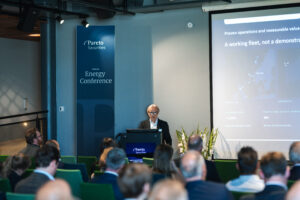


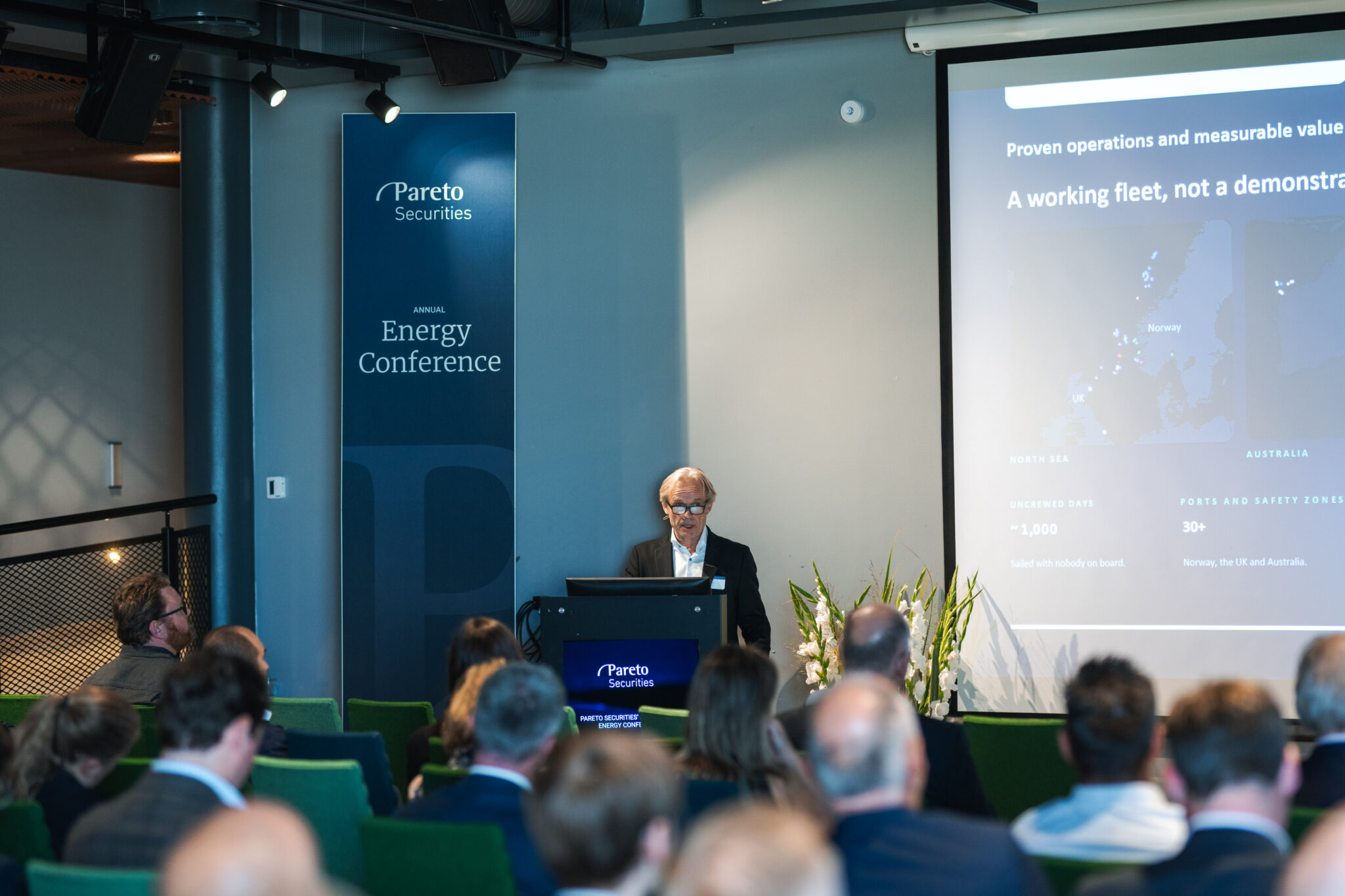
At the Pareto Securities Energy Conference 2026, Reach Subsea CEO Jostein Alendal outlined how the company has moved robotic offshore operations from concept to commercial reality, with nearly three years of development culminating in remotely operated offshore projects across the North Sea, UK and Australia.
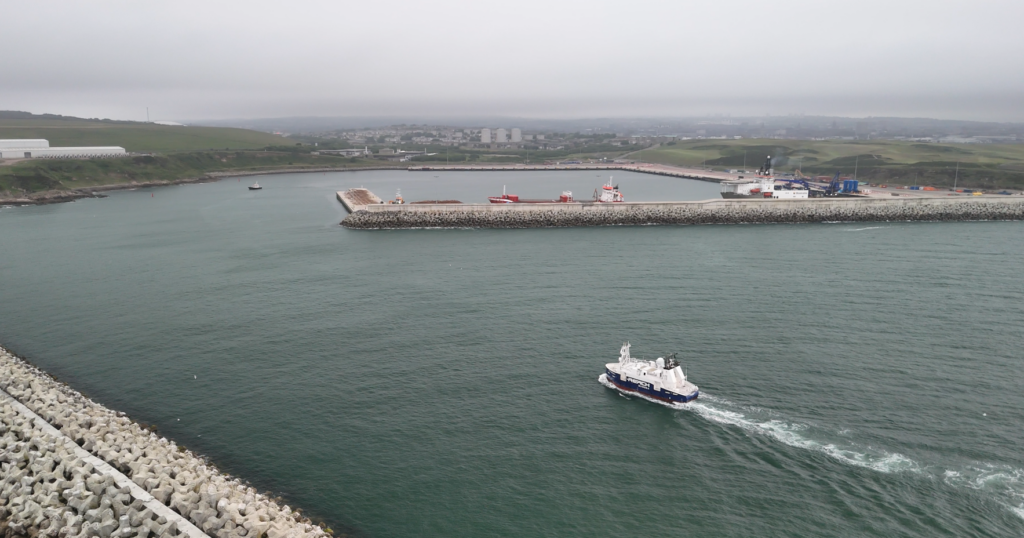
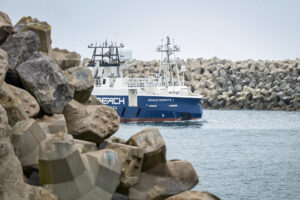
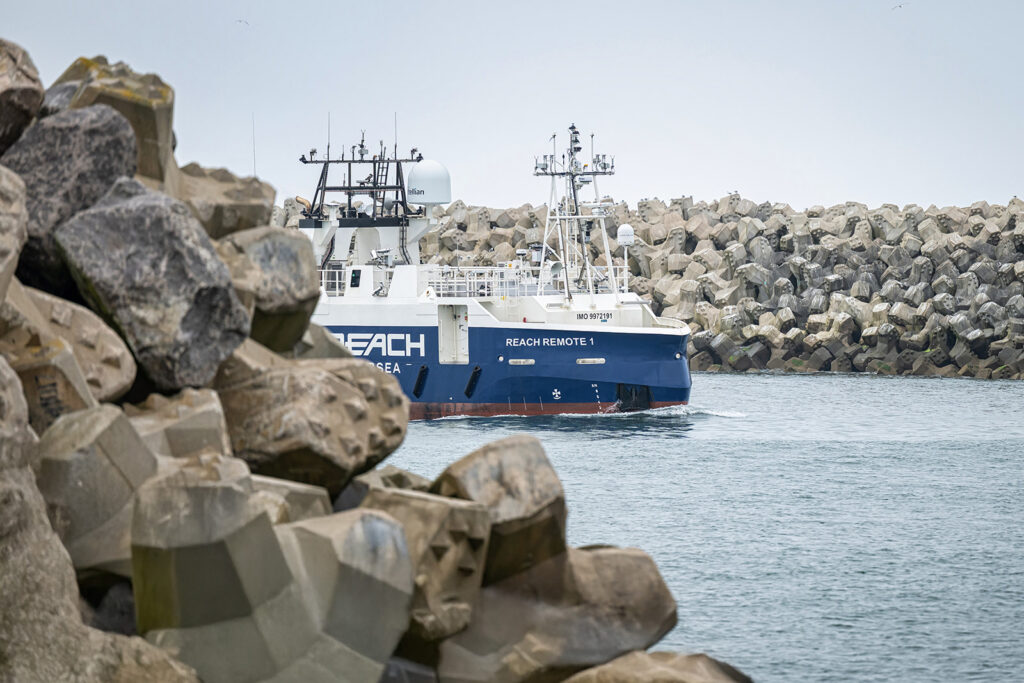
On 16 June this year, a vessel completed a commercial project in the UK sector, sailed into Aberdeen and departed again without a single person on board. The vessel was operated remotely from Norway.
For Reach Subsea, the event marked more than a technological milestone. It demonstrated that uncrewed offshore operations are no longer a future ambition but an operational reality.
Today, the discussion is no longer whether unmanned operations can work offshore, said Alendal. The discussion is how quickly they can scale.
Building a global ocean services company
Headquartered in Haugesund and listed on the Oslo Stock Exchange, Reach Subsea generated NOK 2.7 billion in revenue last year and employs more than 500 people. The company provides subsea services, survey and monitoring solutions to energy and infrastructure clients worldwide, including Equinor, bp, Nexans, TechnipFMC, Statnett, ConocoPhillips and Woodside.
The company currently operates nine chartered vessels, fifteen ROVs and four uncrewed surface vessels. While conventional offshore operations remain a core part of the business, Reach is investing heavily in robotics as a key growth platform.
Reach Remote 1 and Reach Remote 2 are already in service, while Reach Remote 3 and Reach Remote 4 are under construction and expected to enter operation in 2027.
Every industry gets its robots
According to Alendal, Reach Remote represents the next step in a broader technological evolution that has reshaped industries ranging from manufacturing and logistics to healthcare and agriculture.
Every major technology wave eventually creates new operating models, he said.
Reach has a history of capitalising on emerging technologies. In 2015, the company introduced its Surveyor Interceptor, a proprietary subsea survey ROV capable of operating at roughly three times conventional survey speeds. Increased computing power and digitalisation made that development possible.
A decade later, advances in satellite communications have enabled the next leap forward.
Bandwidth increased. Latency decreased. Suddenly it became possible to connect a work-class ROV, a vessel and an onshore operations centre in a completely different way, Alendal said.
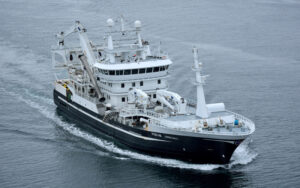
The result was Reach Remote: an uncrewed vessel capable of conducting complex offshore subsea operations while being controlled remotely from shore.
Six years of development
The Reach Remote programme began in 2019 with a straightforward question: could offshore work be performed with personnel onshore rather than on board?
The goal was to maintain operational capability while improving safety, reducing fuel consumption and creating a more scalable operating model.
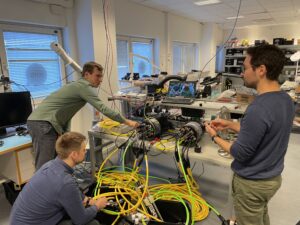
Turning the concept into reality required six years of development, engineering, fabrication, testing and regulatory engagement.
The first two vessels were ordered in 2022 and delivered in early 2025. Throughout the year they underwent mobilisation, pilot testing and offshore verification. At the same time, Reach worked through regulatory approvals in multiple jurisdictions, securing permissions in Norway, Australia and the UK.
The next two vessels were ordered in 2025 with support from the EU Innovation Fund. Large-scale deployment is expected to begin from 2027 onwards.
Proven under commercial conditions
Over the past eighteen months, Reach Remote vessels have carried out commercial projects for major clients including Equinor, Gassco, Vår Energi, Aker BP, Statnett, TotalEnergies, Shell, Harbour Energy, Woodside, Western Gas and the Australian Hydrographic Office.
Collectively, the vessels have accumulated close to one thousand days of operation without personnel on board, entered more than thirty ports and safety zones, and completed a twenty-six-day continuous voyage involving repeated ROV operations.
Importantly, these activities were performed under different regulatory frameworks and in some of the world’s most demanding offshore environments.
This is no longer a technology project, said Alendal. It is an operational system being used by major energy and infrastructure clients under real regulatory conditions.
Delivering measurable emissions reductions
For Reach, one of the most significant outcomes has been fuel efficiency.
Over the last twelve months in the North Sea, Reach Remote 1 consumed 268 cubic metres of marine diesel while carrying out normal offshore activities including survey work, ROV operations, transit and weather standby.
By comparison, Viking Reach performed the same type of work over equivalent operating hours while consuming just over 2,100 cubic metres of marine diesel.
The result was an 88 percent reduction in fuel consumption.
That figure is measured in operation, not modelled, said Alendal. Because emissions follow fuel consumption, it is a number our clients can put straight into their own reporting.
The implications extend beyond individual projects. Reduced fuel consumption at this scale not only lowers emissions for a single vessel or campaign but also highlights the potential for substantial emissions reductions across offshore and subsea operations if similar operating models are adopted more broadly throughout the industry.
Reach Horizon connects operations globally
While the vessel is the most visible part of the solution, Reach sees the supporting digital platform as equally important.
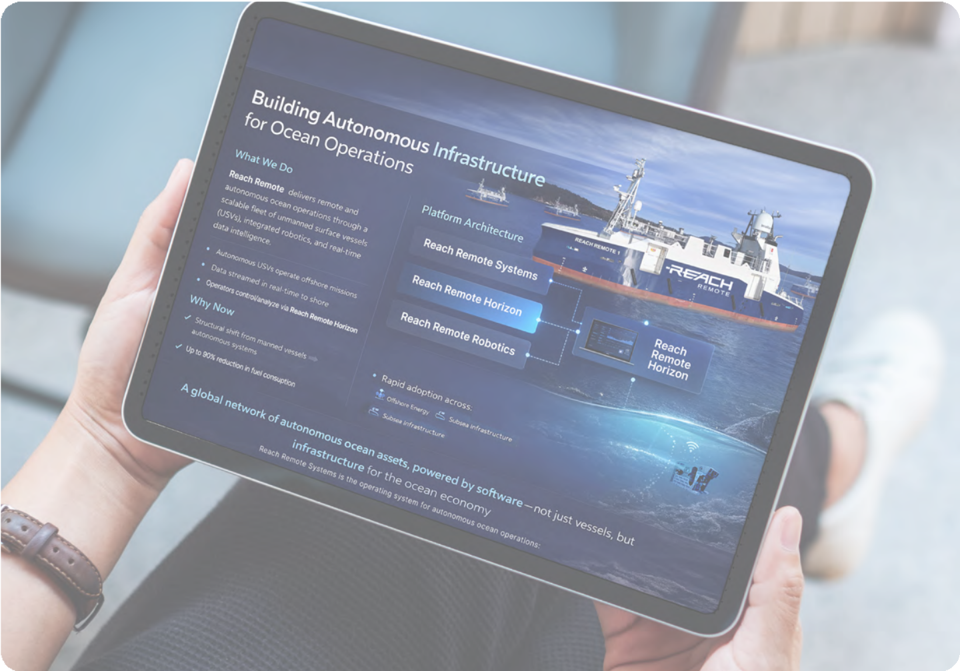
Reach Horizon is the company’s operational platform, connecting vessels, subsea assets, data and specialists across multiple onshore hubs.
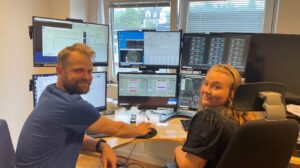
Earlier this year, a vessel working in the UK sector was controlled from Norway. Operations in Australia have involved personnel working across Bergen, Oslo and Aberdeen, enabling continuous 24-hour support regardless of vessel location.
The vessel is the robot people see, said Alendal. The real product is the system around it.
Advances in satellite connectivity have been a key enabler. According to Reach, available offshore bandwidth has increased roughly twenty-five-fold in recent years, allowing specialists, vessels, ROVs and survey systems to operate as a connected ecosystem.
The company has already integrated around thirty tools into the platform and continues to expand its capabilities.
Aqoryx created to accelerate adoption
Earlier this year Reach established Aqoryx, a dedicated technology company focused on the commercialisation and scaling of its robotic operations platform.
Alendal believes a technology company requires a different structure than a service provider.
A technology company and a service company have different requirements when it comes to growth, capital and partnerships, he said.
Reach is currently engaging with both industrial and financial partners as part of the process.
The goal is to accelerate deployment of the technology, expand the robotic fleet and continue development of the platform.
Aqoryx can build a larger fleet, keep developing the platform at its own pace, and make the technology available far beyond Reach Subsea, said Alendal. That will make it easier for customers anywhere in the world to access and order offshore and subsea operations across the global oceans.
Rather than remaining exclusive to Reach, the technology could ultimately serve a broader range of offshore industries and users worldwide.
From technology risk to scaling
For much of the last decade, Reach carried the risks associated with developing technology that had not previously existed in commercial offshore operations.
According to Alendal, that phase is largely complete.
Two vessels have now been built, verified offshore, approved across multiple jurisdictions and deployed for commercial clients. The primary challenge is no longer proving that robotic offshore operations work.
The focus now is expanding the fleet, improving economics through scale and driving wider industry adoption.
The hardest part was proving it could be done,” Alendal concluded. We have done that. Now it’s about scaling it.